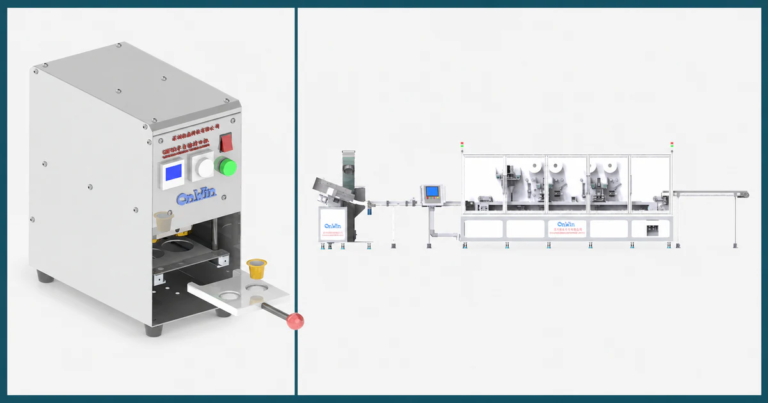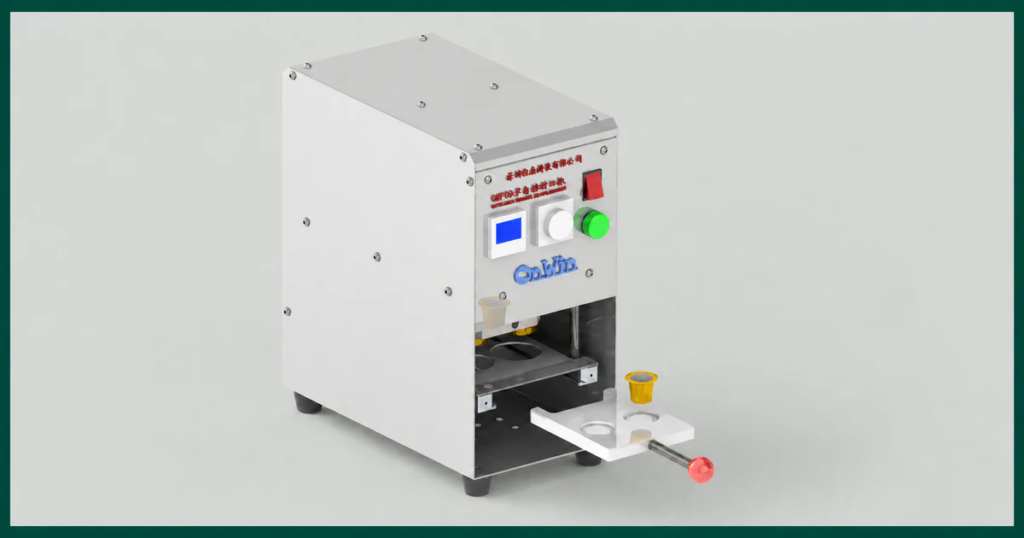
Buying a capsule filling and sealing machine feels like progress. It gives a project a model number, a capacity and a budget. But equipment is only useful after the product has a workable process.
Before you buy a machine, test the questions that a machine purchase cannot answer: Will the powder dose consistently? Which capsule format suits the drink and the target market? Can the cup and lid form a repeatable seal? Does the brewed result meet your standard? Will buyers respond to the finished product?
A small pilot run will not remove every production risk. It can, however, show you whether the current concept is ready for equipment selection or still needs work. That is the purpose of testing before you invest.
The short answer: prove the product before sizing the machine
Equipment selection should follow three separate decisions:
- Product feasibility: the ingredient can be dosed, sealed and brewed in a suitable capsule structure.
- Commercial direction: the format, presentation and cup result make sense for the customers and channels you want to reach.
- Production demand: the expected output and labor plan justify owning equipment rather than continuing with pilot, contract or small-batch work.
If one of these is still unclear, the equipment specification is also unclear. For example, a brand may initially assume it needs a Nespresso-compatible format, then discover that its serving size or drink style is better suited to a larger capsule. Another team may have a sound product but no reliable forecast for monthly demand. Those projects need different next steps.
ONWIN's Capsule Incubation Service is intended for this earlier stage: work from the ingredient and commercial brief toward a testable capsule, then discuss equipment after the process is better defined.

What to test before asking for a machine quotation
1. Start with a commercial brief, not a machine model
Write down the drink you want to make, the market where it will be sold, the brewing system you expect customers to use and the position of the product. Also note whether the sample is for internal tasting, distributor meetings, retail review, an exhibition or an online launch.
This context changes the test. A premium espresso concept, a milk-based instant drink and a functional powder do not have the same serving size, flow behavior or brewing requirement. If the market and use case are vague, comparing machine specifications creates false precision.
2. Screen the powder as a production material
A powder can taste good in a cup and still be difficult to fill. The pilot should observe how it moves, settles and responds to handling. Relevant factors may include particle distribution, bulk behavior, moisture sensitivity, static and whether the product tends to bridge, dust or cling to the dosing path.
The goal is not to label the powder as simply "good" or "bad." It is to learn what kind of dosing and process control it needs. The answer may point to a different preparation method, a change in particle distribution, a modified recipe or a different filling configuration.
3. Compare capsule formats against the drink and the market
Do not choose a format from appearance alone. Consider the serving style, available brewing systems in the target market, product dose, internal structure and supply requirements. Our Product Selector is a useful starting point, but the final choice should be checked with the actual ingredient and brewing target.
"Compatible" means designed for use with a named brewing system. It does not mean that ONWIN or the finished product is authorized or endorsed by that brand.
4. Test the capsule, film and sealing process as one system
An empty capsule is not a complete package. The cup material, lid or roll film, contact surfaces and sealing settings have to work together. A pilot should look for obvious seal defects, contamination in the sealing area, deformation and consistency across the sample run.
The test must use the intended material combination. A good result with one lid does not automatically transfer to another construction or print supplier. For the same reason, the settings found during a pilot become starting parameters for scale-up, not a permanent recipe that never needs verification.
5. Brew and handle the finished capsules
Inspect more than the first cup. Brew a defined sample set and record what happens: puncture behavior, flow, visible leakage, cup volume, extraction time and sensory result. Keep the brewing machine and test method consistent enough to compare versions.
Then handle the capsules as a customer or distributor would. Check appearance, lid alignment, coding area and pack presentation. If the pilot samples will be shipped, confirm the protective packaging before using the shipment as a commercial test.
A pilot can reveal immediate packaging and brewing issues. It does not replace a formal shelf-life study, food-safety review or regulatory work for the target market.
6. Use samples to answer a decision, not just to fill a box
Before the run, decide who will review the samples and what feedback you need. A distributor may care about format availability and landed cost. A retail buyer may focus on presentation and range. Your own team may need a blind cup comparison against the current product.
Record feedback by sample version. "People liked it" is hard to act on. Notes such as "Version B had a cleaner flow but the drink was too light" give the technical team something to revise.
A practical go/no-go gate for equipment
Use the pilot to choose among three next steps.
| Evidence after the pilot | Sensible next step |
|---|---|
| Powder, format or seal is still unstable | Continue technical trials; do not lock the equipment specification |
| Product works, but demand is still uncertain | Use pilot, OEM or small-batch production while testing the market |
| Product works and there is a credible recurring volume | Begin equipment selection using the validated format and process requirements |
When you reach the third line, capacity is only one part of the specification. The machine also has to fit the capsule format, powder behavior, dosing method, film type, factory utilities, labor plan, cleaning expectations and future SKU mix. ONWIN's Filling Machines page shows the current equipment families, from semi-automatic sealing through automatic lines. The final model should be confirmed against the project facts rather than selected from output rate alone.
Signs that a machine purchase is premature
Pause the equipment decision when any of these statements is true:
- The capsule format was chosen before testing the drink.
- The formula is still changing between sample rounds.
- No one has checked the intended capsule and lid combination.
- The expected volume is a hope rather than a sales or production plan.
- The team has not decided whether it wants in-house production, OEM supply or a staged combination of both.
- A quotation is being compared only by capsules per hour.
These are not failures. They are useful signals that another pilot cycle may be cheaper than committing to the wrong production setup.
A real sample-to-scale pattern
One ONWIN customer in the Middle East began with several beverage concepts and custom printed lids. The brand used semi-automatic equipment for early batches so it could test multiple SKUs before committing to automatic production. When orders grew, the filling and packaging requirements were clearer, and the team moved to an automatic line configured around the behavior of its instant drink powders.
The important part of this pilot-to-automatic-line case is the sequence. The customer did not ask a large machine to solve an untested product decision. It used early production to learn which products deserved to scale.
What to send when requesting a pilot
Prepare the following information before contacting a capsule partner:
- ingredient or formula type, including any handling concerns already known;
- target country and intended brewing system;
- drink style and desired cup result;
- preferred capsule format, if one has already been considered;
- purpose of the samples and the people who will review them;
- target launch window and current estimate of demand;
- packaging, print or confidentiality requirements;
- what decision the pilot must support.
You do not need to arrive with every answer. A clear account of what is known, unknown and still being tested is more useful than an overconfident machine specification.
Frequently asked questions
Do I need to buy a machine after a pilot?
No. The next step may be another test, OEM supply, small-batch production or equipment selection. It depends on the process result and the commercial plan.
Can one successful sample prove shelf life?
No. A pilot can identify visible sealing and handling problems, but shelf life depends on the product, barrier structure, storage conditions and a suitable validation method.
Should I test more than one capsule format?
When the format is still uncertain, a controlled comparison can be useful. The number of versions should stay small enough that each result can be evaluated properly.
What if my powder does not fill consistently?
Treat that as test information. The team may need to adjust preparation, particle distribution, dosing configuration or the capsule concept before equipment is specified.
Test the product, then choose the production path
If you have an ingredient but are not ready to commit to equipment, send ONWIN the product brief and the decision you need to make. We can review the project, define a pilot scope and map the next step only after the sample evidence is in front of us.
Request a capsule pilot or contact ONWIN with your ingredient, target market and intended capsule format.